What This Is
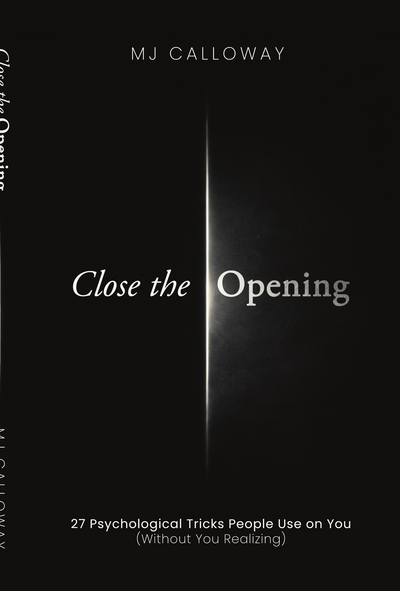
A reference guide to the most common pressure tactics in everyday conversations. Not theory—pattern recognition you can use the same day you read it.
Each of the 27 tactics is broken down the same way: what it sounds like in real conversation, why it works on you specifically, and a clean response that ends it without escalation or over-explanation.
Who It's For
People who notice—after the conversation—that they gave ground they didn't intend to give. People who can feel something happening in real time but can't name it fast enough to respond. People who are tired of replaying conversations and wishing they'd said something different.
The Framework Behind the Book
Every tactic in the book targets a specific vulnerability — what the Close the Opening framework calls an Entry Point. Your Entry Point is the place where pressure consistently enters your conversations. It's not a flaw. It's a pattern — and once you can see it, the tactics that exploit it become predictable.
The seven Entry Points are: The Explainer, The Nice One, The Fixer, The Performer, The Avoider, The Loyal One, and The Rationalizer. Each chapter maps which tactics target which Entry Points — so you can go directly to the patterns that apply to you.
Not sure which one is yours? The free Entry Point Assessment identifies your primary opening in 4 minutes.
What's Inside
They keep asking you to explain until your confidence erodes. The goal isn't understanding—it's exhaustion.
Your boundary gets reframed as an act of cruelty. Suddenly, protecting yourself becomes the thing you need to apologize for.
"After everything we've been through." Past investment gets weaponized to override present judgment.
They're not more informed. They're more certain. And that certainty makes you defer when you shouldn't.
Urgency that isn't real, designed to bypass your ability to think clearly before responding.
Plus 22 more—each with real-world examples and clean responses.
What Makes It Different
No therapy framing. No empowerment language. No scripts for "winning" conversations.
Just the mechanics of how pressure works—and the shortest path to stopping it.
Who It's Not For
Anyone looking for scripts to manipulate others. This is a defensive playbook, not an offensive one.